Two types of bearings are mostly used in machine building.
These are rolling bearings and sliding bearings.
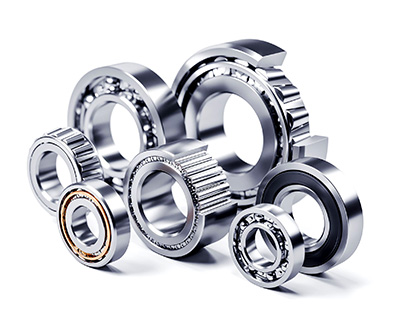
Rolling bearings can be classified as follows:
- by type of rolling elements: ball and roller bearings;
- By type of received load: radial, radial-thrust, thrust, linear bearings;
- By the number of rows of the rolling elements: single-row, double-row and multi-row
bearings;
Sliding bearings are divided:
- Depending on the shape of the bearing bore: bearings with one or multiple surfaces,
with or without shift of the surface; with or without center shift;
- By the direction of load accommodation: radial, axial, radial-thrust bearings;
- By design: solid, split or built-in bearings;
- By number of oil valves: with one or more valves;
- Depending on the possibility of regulation: unregulated or regulable.
Close
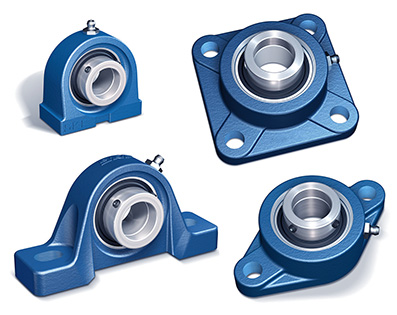
Except seals, bearing assemblies may include bearing housings.
They have a simple design and require no complex maintenance.
Main housing types are:
- Split fixed housings;
- Undivided fixed housing;
- Flanged housings;
- Tension housings.
Their application range is quite wide: drums and transporters; rotary furnace and pipe-and-tube
mills;
wind power plants; large-size electrical machines; roller tables and converters, etc.
Close
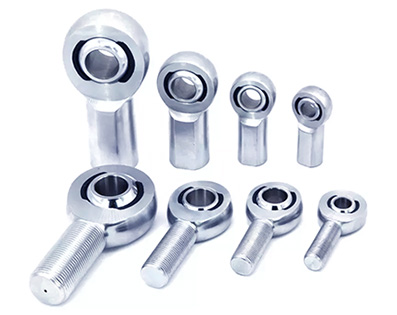
Rod ends and sliding bearings are used to ensure a reliable connection between the housing and
the
shaft, especially when their mutual movements are not straight. They can receive axial, radial,
and
combined loads; they can move in three planes at once, and they can also self-center.
Rod ends consist of:
- a housing;
- a bushing (there is a ball shaped sliding joint inside).
Close
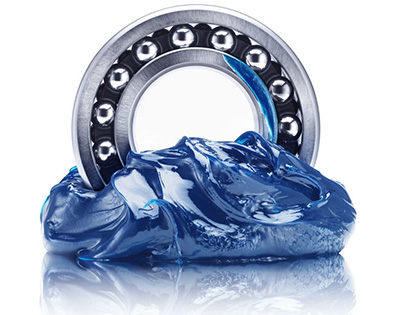
Almost half of the cases of bearing failure are related to their incorrect (insufficient or, on
the
contrary, excessive) lubrication. Manual lubrication takes a considerable time, and the
lubricated parts
may be located in hard-to-reach or even dangerous places. When using automatic lubricators, a
continuous
supply of the required grease amount is provided.
Close
They can be used in almost any industry, but they are most widely used in the following areas:
electronics and semiconductor manufacturing, pharmaceutical industry and medical equipment,
woodworking,
general enterprise automation, food processing and packaging industries.
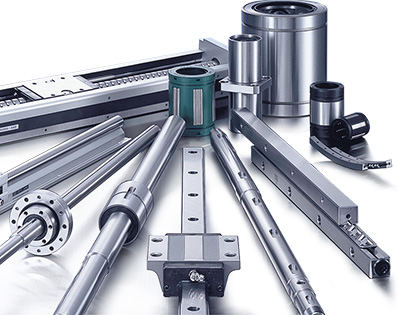
Linear motion systems include:
- Profile rail guides;
- Ball screws (ball screw);
- Linear modules;
- Roller-screws;
- Ball bushings;
- Cylindrical guides;
- Actuators.
Close
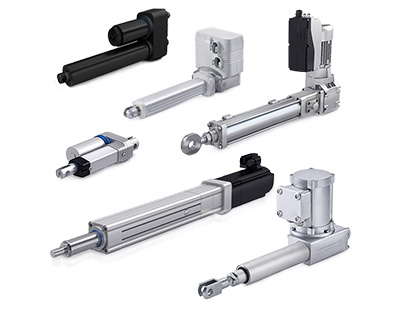
The electromechanical actuators help achieve a controlled, precise, reciprocating movement and
are a
good and, most importantly, environmentally friendly alternative to pneumatic and hydraulic
actuators.
What needs to be considered when choosing an actuator for your use? First of all, it’s the
retracting
and pushing forces as well as the lifting capacity, the speed, stroke and length when retracted,
engagement time and lastly, the utilization factor.
The actuators are used in a variety of fields, such as: food, medical (particularly during the
manufacturing process of medical furniture), the tracking and building of automation systems,
factory
automation, etc.
Close
The main types of fans are:
- Centrifugal (or radial): these are mainly used for industrial applications.
They have high capacities and fairly high efficiencies;
- Vortex fans: they are mainly used in vacuum equipment, pneumatic transport,
hoovers, blowers, etc.
- Axial:
they are used both in households for the ventilation of homes and in the industry to remove
vapors
and gases,
to supply air for the machinery, for the cooling of tools and machine parts, and to
supply air for ovens;
The fans can be also classified by the amount of pressure that they can exert:
- Low-pressure fans (up to 1000 PA);
- Middle-pressure fans (from 1000-3000 Pa);
- High-pressure fans (more than 3000 Pa).
Close
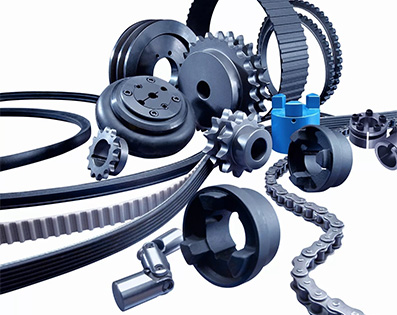
Belts: classic, narrow V-belts, V-belts and toothed belts;
Pulleys: Narrow V-belt pulleys with sleeve, US Standard V-belt pulleys with
sleeve,
Classic V-belt pulleys with sleeve, toothed pulleys
ANSI and ISO metric sprockets: flat sprockets, single, double and triple row
sprockets;
sprockets with guide bush on one or both sides; plain bore and keyed sprockets; sprockets with
tapered
bush.
Bushings: Tapered bushings in sizes 1008-120100; welded bushings; bolted hubs;
adapters.
Close
 SLIKL CO., LTD